recently featured posts we've got 84 articles so far

Passionate Discourse 0

by Denise Finley

Sep7

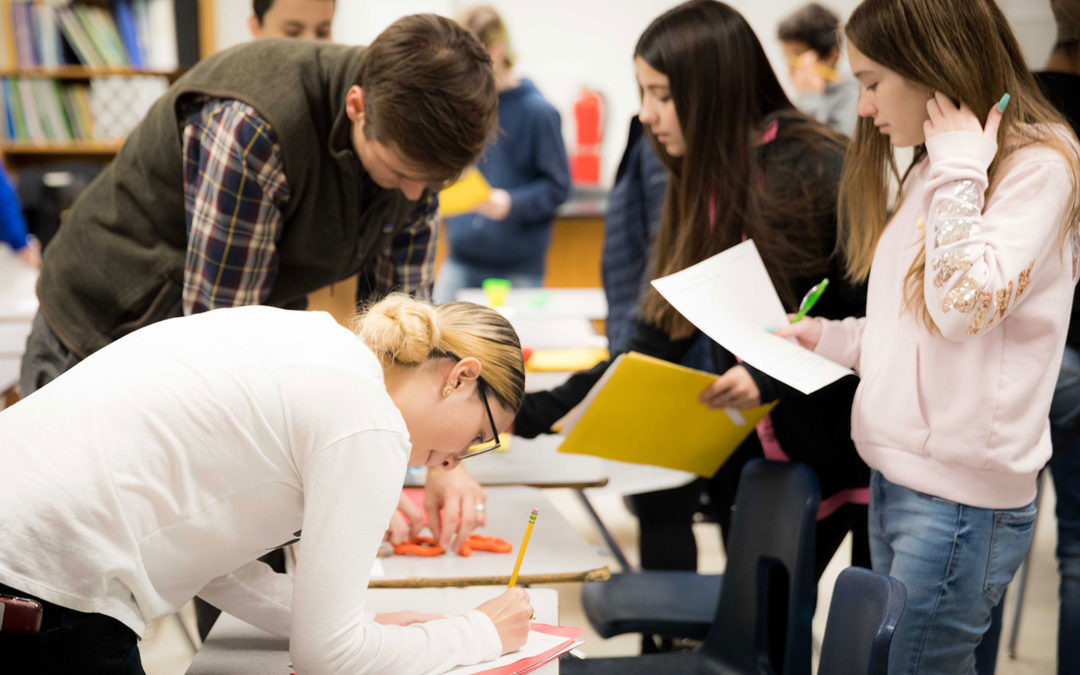
All people need to be involved in passionate discourse every once and a while. This gets the heart pumping, the blood moving, oxygen flowing and the brain functioning at higher levels. Shouldn’t students be involved in this type of activity?

In recent months the oil spill in the gulf has caused me to pause and think about what could happen in the classroom around this topic. There was a commentary today in Education Week titled: Now Is the Time to Support Science Teachers with the blurb:  Concern over the Gulf of Mexico oil spill will increase both students’ and the public’s interest in science education, writes Siemens Foundation President Jeniffer Harper-Taylor, but that interest must be met with creative efforts to bolster science teaching. (July 22, 2010)


Students could discuss this topic in any and all subjects and learn the content simultaneously.

When I ask teachers if they are going to use this topic as a focus for learning I have had zero takers. Teacher comments have been around their concern that students will get too passionate about the topic and difficult to manage. This line of talk saddens me. I find teachers don’t trust their skill in guiding discussion.

In a previous blog I made a few suggestions about scaffolding the process of academic dialogue and I hope a few teachers have considered trying some of the ideas. I also think students need to practice discussion and we need teachers willing to take risks and see what happens.

One of my most recent disheartening discussions occurred with my adult children and their reflections about the lack of discussion that occurred around 9 11. One child was in high school, the other in college and there was no discussion in any classroom. The topic was brought up numerous times in different classrooms and none of the teachers would engage classes in this discussion. I understand many were in shock and couldn’t start, but my children voiced the reality that they needed that discussion in a public form. The discussions at home weren’t enough and they still feel disappointment that conversations didn’t happen in their classrooms. How do we find the time, take the time to have passionate discourse with students? What do teachers need to start the process?

Playing with a proportional reasoning activity- art/math/learning 0

by Roland O'Daniel

Sep3

I’m always trying to think about how I can bring activities together thatachieve the goals of getting students to use math, things like: measure,

Sherri blue sausage people

gather data, use the data to design something or predict an outcome, and have some kind of application that might be engaging to them. As I was walking my dog this morning, I started thinking about (don’t ask me why, I just did) having students draw a human figure. It’s a skill that is hard for me, but it’s not difficult for artists, because they have explored and memorized the expected proportions for “average” people. Check out Sherri’s blue sausage people if you don’t believe me. When I talk with Catherine or Sherri about drawing a person’s face they start with identifying the basic shape of the face, and then find the mid-line and half-way point.

Interestingly, the half-way point is approximately where the eyes go. In fact here are some guidelines for drawing a human face:

  • Eyes: The eyes are always halfway down, between the top of the head and the bottom of the chin. They are also an eye-length apart. This means that, however long you decide to make the eyes, there will be that much space between the eyes as well (yes, break the horizontal distance into thirds; who knew artists did so much rational number thinking when they drew).
  • Nose: The rest of the face underneath the eyes is divided into thirds (breaking the bottom half vertically distance into thirds or sixths). At the one-third line will be the bottom of the nose.
  • Mouth: The next third, or two-thirds of the way from the eyes to the chin, should be the mouth. The mouth’s edges should be in line with the middle of each eye. To check this, put your pencil on the middle of one of the eyes. If the lower part of the pencil touches the outer corner of the mouth, it is aligned correctly.
  • Ears: The top of the ears line up above the eyes, on the eyebrows (It doesn’t say in this set of guidelines, but I wonder what the ratio of the top of the eyebrow is with the overall face? Hmmmm…).  The bottom of the ears line up with the bottom of the nose.

Here is a sketch of a face with places to record measurements for all kinds of different distances. (Note the image doesn’t necessarily reflect the estimates above so that students need to use their own data to identify those ‘averages’.)

measurement of head features6

With these two ideas (drawing bodies/faces & measurement) in mind I think it is interesting to have students gather all kinds of measurement data (see my previous post on Measurement in the POS for KY), identify the means of the different measurements and use the measurements to create ‘average people’ or the ‘average face’.

This activity is a simple concept, not overly exotic, can be pulled off in relatively short amount of time, and opens up other opportunities (which is the part I think has great potential for extension/connection, but alas a post for another day).

measurement of head features

When working with middle school students there is often a concern about being different. Obviously, this old man isn’t too concerned about fitting in anymore, but an alternative to measuring their own faces is to have students gather pictures of other people’s faces and measure those. One thing I like about this idea is that students can measure the attributes lots of different ways- measure from a hard or paper copy, measure electronically in the paint application on the computer using pixels as units (see next month’s blog post about specifics), measure using metric or English standard (or both if you want to look at the data from a bivariate perspective). It’s pretty easy to imagine students taking their own pictures to measure and makes sense to me, but both options are great ways to get students measuring.

I know this isn’t an original idea because artists have been doing this for centuries, but I think it is time mathematics teachers got in on the action.

Engaging Parents to Engage the Kids 0

by Barbara Myerson Katz

Aug31

This past March, I facilitated a day-long series of activities for parents as part of the annual GEAR UP Alliance Institute for a College-Going Culture here in Louisville, an event that draws some 800 educators, parents and students from throughout Kentucky to learn about and develop ideas to prepare traditionally underserved students for postsecondary education. Working with my educator colleagues to design these parent sessions and as a parent myself who was always very involved in the education of my children, I spent a lot of time thinking about how and why parents become engaged in the school lives of their children.

In my case, my own parents were role models:  Both my mother and my father took an active interest in everything I did, in and out of the classroom.  What I did in school each day was Topic 1 at the dinner table every night.  What were we studying?  What supplies did I need for school the next day? Graded papers, tests and report cards were presented and discussed.  Assignments that were difficult (read: math) were analyzed:  What did I not understand?  How might I approach the teacher for help?  Could Mom or Dad help me at home?  (When timed arithmetic tests made me nervous as a second grader, Dad made up tests for me to practice at home.  “See?”  he’d say as I gradually calmed down, “You know how to do this!”)

My parents eagerly attended school meetings and events.  They served as room parents, field trip and school dance chaperones, and members of the parent-teacher association.  They knew my principals and teachers, and my principals and teachers knew them.  As a teenager, I responded with classic rolled eyes to their ongoing presence–but loved that they cared enough to be so involved.  As I prepared to apply for college, Mom and Dad–Depression-era kids, neither of whom had graduated from college–were involved in the process every step of the way.

And so my husband and I likewise focused on our son’s and daughter’s school lives–discussing, advising, supporting, applauding, meeting, advocating, and taking active roles both in and outside of school.  “We’re all on the same team,” we used to say to our kids’ teachers on conference day.  “Let them know what you expect, and we’ll back you up at home.”  When it came to the college preparation and application process, we were on it like peanut butter on jelly:  We read, asked, debated and discussed right along with our kids, supported their decisions about where to apply, and then made sure they had what they needed to succeed.  Our involvement was good for our son and daughter, but not incidentally, also a tremendous pleasure for us.  (Our kids were great eye rollers, too–but also always let us know, sometimes well after the fact, that our presence had been greatly appreciated.)  We were fortunate to have as a blueprint the example set by our own parents, reinforced by our own good personal experiences with education, making schools comfortable places for us to be.

As an educator, parent or both, what do you see as the facilitators and the barriers to parent engagement in the education of their children?  How have you personally reached out or been drawn in?  What would make the process easier or more inviting–for educators and for parents?  If parents could ask their children’s principals and teachers anything at all to help them become more involved in the school lives of their youngsters, what would those questions and requests be–and what should be the answers?  I will report your responses in a future post, and will incorporate your suggestions in the planning for the 2011 GEAR UP Alliance Institute parent strand.

Teacher Visits Bridge Relationships between Home and School 0

by Ashley Perkins

Aug27

Schools across the United States have opened their doors to kick off a new school year.  Teachers and administrators have engaged in professional development to revise procedures and protocols in hopes of making this next school year even better than the last. In these efforts, many schools have identified relationship building as a target. Many districts expect to attend to this focus is by having their teachers conduct home visits to their students.

I often think back to an unannounced home visit I made to a student. I traveled to Kevin’s income based apartment complex. As I stood on the stoop ringing the door bell, I remember examining my surroundings in trying to learn as much as I could about this student’s environment. It was then I caught Kevin peeping out an upstairs window. We made eye contact and then the blinds jerked shut, making it clear he was blocking me and my good intentions out of his apartment. During the drive home, I kept reflecting on why I had not been invited into his home. Was he afraid If he had invited me into his apartment, my being there would have made for an unsafe, awkward or embarrassing situation for him? For me? Whatever his reason, Kevin had reservations about allowing me into his domain.

There are concerns when teachers make surprise and sometimes even announced, home visits. However, there can be real value in conducting these visits when they are well thought-out. The training and dialogue teachers are engaged in to prepare for these visits cannot be minimal or teachers are inadequately equipped to be most effective when out visiting homes, as evidenced in my visit to Kevin’s. If a district is creating a policy suggesting that all teachers engage in these visits, it’s essential to engage in thorough thinking, planning, and dialogue before the plan takes action.

Key questions that may need to be addressed include:

  • Have the administrators engaged in the home visit protocol? If so, what insight are they able to share with their staff about the process? What was successful? What was unsuccessful?
  • What does the research show about schools with similar demographics?
  • Is there funding for this process or are teachers asked to use their own time and money to travel to the homes?
  • Have parents/guardians been informed of the policy? What feedback was received?
  • Will the visits be unannounced or scheduled?
  • What does the teacher hope to learn during the visit? Is there a scripted set of questions he/she is asking the parents/guardians?
  • What procedures are to be followed if the teacher has concerns for the safety or well being of the child or for himself/herself?
  • Is there follow-up to these visits like an email, postcard, or phone call? What are next steps?
  • How will teachers report and use the data gathered from visits to positively impact student performance?

The visits need a clear and focused purpose for everyone involved or the impact will be minuscule and in some cases damaging. When done well, home visits bring positive results in building relationships.

I like my job! I like my desk! I like my computer! I like my felt tip pens! 1

by Sherri Beshears-McNeely

Aug20

As the summer hits mid-point and schools are gearing up to begin again, I’m reminded I’ll be back on the road extra early soon enough and perhaps need to reconsider my morning routine. I’m not at all a morning person and when my day has to start before the sun rises, I can be particularly monster-like as I wind up and get rolling. This video got me thinking about my own “self-talk” and how I might reframe my thinking to make mornings more bearable.

Likely if you are a coach, teacher, or administrator you spend a great deal of time pumping others up and motivating them to feel good about themseleves and their contributions. Today, be selfish. When your tank is full of goodness, it’s easier to dispense. Ask yourself:

  • What do you like about your job?
  • What projects are you most excited about?
  • What can you do better than anyone?

You don’t have to stand on the sink, but say it out loud. Know I’ll be doing it too on my long drives along I-64. If you see me, give a thumbs up.

The Textbook: Your New Best Friend (Part I) 0

by Amy Awbrey Pallangyo

Aug14

oldbookTextbooks used to be the mainstay of instructional resources in the classroom.  One of the greatest struggles teachers had was asking students to read the textbook, answer the questions, and be able to remember anything they had read.  This frustration led to wide discussion among teaching communities that student reading capacities were poor, that they simply could not ask students to read independently.

A number of years ago, there was a large call for teachers to use more “authentic” text with students.  For purposes of currency of information and engagement for students, authentic text became the mantra of the day.

These two happenings – the struggle with textbook reading, and the call for use of authentic text – led many teachers to feel justified in abandoning the traditional textbook in favor of other types of text.  There was only one problem with this – we didn’t see the use of authentic text go up in most classrooms, we only saw the abandonment of the traditional textbook.  In other words, kids stopped reading to learn.

This problem manifests itself at the middle and high school in particular.  I observe teachers using straight-0n lecture and note copying strategies in many classrooms. When I ask “what about having students read independently sometimes?” I hear that they can’t read the text, they don’t have the reading skills.  This is actually not true.  Reading scores on state and national assessments, particularly in Kentucky where I do most of my work, are going up – even at middle and high school levels.  All evidence of student behaviors in the literacy classroom, on literacy assessments, and frankly, in their daily lives suggest that they can read.

Now, I’m not calling teachers out, nor am I saying they’re wrong.  I think the problem is that the statement needs to be specific “Students can’t read’ needs to be translated into “Students can’t read informational text.”  This makes sense to me.

Lets look at elementary reading instruction, the place where students are prepared for what they will read in middle school, and at middle school reading instruction, where they are prepared for what they will read in high school.

Elementary School: Most, if not all reading instruction at the elementary level is literary in nature.  The text is literary, the strategies are literary, the lessons are literary, and the follow-up book-related activities are literary.

Middle School: Many students do not receive regular reading instruction at the middle school level.  There may be an English class, but a reading class?  And, if they do participate in a regular reading program, guess what?  It looks much like what we see at elementary school.

So, I ask you – How can students be expected to read informational text if  they’re never taught how to do it?  They can’t be.   Another question – Should they be able to read informational text?  Is it appropriate to ask them to read for learning in the middle and high school content classroom?  I’d say yes.

There is no single answer to solve this major learning skills problem.  Clearly upper elementary grades is the place to start, with direct instruction for students to develop informational reading skills, a completely different skill set than those used to read and comprehend literary text.

But also just as clear to me is the need for middle and high school ELA programs to begin to address their state and national standards – including those standards that say students will learn informational reading skills, and will read informational text.  We can’t ignore them any longer.

I don’t suggest milddle and high school English teachers are of bad will.  I suggest they have never been trained or expected to teach informational reading.  Well now the time has come that they must.  So, how to do that?   More in my next post.

Why did I leave the plow in the field… 0

by Dennis Horn

Aug13

Not long ago, my father turned the ripe young age of 73. As our gift for such a milestone, my wife and I took him and my mother to one of his favorite barbeque restaurants in small-town Kentucky. It was one of those places you might see on a Guy Fieri Diners, Drive-ins and Dives episode, full of regulars, pit smoke and home-spun stories.

…and look for a job in the town?

Tucked into the front corner of the restaurant was a small stage area for performances. We had heard that on occasion, instrumentalists will gather to perform for patrons, typically intoning the acoustical sounds of Bluegrass guitar, mandolin, fiddle and banjo with high-lonesome voice accompaniment (I should note that my father loves–absolutely loves–Bluegrass music, and considers himself to be somewhat of an amateur historian of the genre).

Much has been written about the contemporary condition of life absent a sense of belonging and community—a yearning for an old home place.

While digging into a slab of smoked ribs, a group of musicians began to assemble and perform various standards, including one of my dad’s favorites, Old Home Place, by J.D. Crowe. The song’s lyrics tell of a man who returned home after years of working in the city, only to find his home place ruined by neglect. He sings “I’ve lost my love, I’ve lost my home and now I wish that I was dead.” Much has been written about the contemporary condition of life absent a sense of belonging and community—a yearning for an old home place.

The combination of the song’s lyrics and the impromptu gathering of local amateur musicians started me thinking about the power of the arts to encourage, and make these kinds of cultural gatherings possible. I also reflected on the fact that I reside in a state where these kinds of events occur quite often in rural settings; in living rooms and backyards, during family reunions, church events and local festivals. I once knew a farming couple in Avenstoke Kentucky who, about once a month during the winter season, would shove all the living room furniture to the wall to make room for “pickers and foot stompers” and invited friends. These occasions were highly valued by members of their small farming community.

I marvel at the ability of the arts to enable this kind of sharing and reinvigorating a sense of community and belonging.

The Zen of Teaching 0

by Amy Awbrey Pallangyo

Aug10

Teachers view themselves as actioners, people who implement things and actions to have influence on and impact their clients, students. Those of us who teach focus our efforts on the doing of teaching, the interactions that take place in our classrooms everyday, the immediate success or failure of our students to grasp new concepts, remember new information.

But what if we focused more of our time on what happens before instruction, what happens after?  In my years of classroom teaching, I worked very hard during the school day. For many years, my mind was so taken up with the actual activity of the day that I had little energy left to consider and reflect at the end of the day about how well it went, about what difference it made for my learners.  As I moved through my teaching career, I got better at what I did, my work was more efficient, the job became second nature to me.

It was when this happened that I actually learned how to be a better teacher.  I had time, time to think at the end of the day, time to reconsider the decisions I had made during the day, and what impact they had on my students.  I began to reflect, and it changed everything about what I believed it meant to be a teacher. 

I went from active instructor to pure facilitator of learning, almost overnight. I realized that I was less than necessary in the learning environment, but that I was also critical.  My critical role was to set up experiences for students that would not create barriers for them, to engineer pathways that were safe and risky at the same time, that would allow students to explore, but still in the end ensure that they arrived at the same understanding and growth that common standards for learning dictated to me. 

I began to take a backseat during the instructional day, and to take a much more proactive role before and after the instructional day.  The moment I stopped asking the question “what am I going to do today?” and started asking the question “What are they going to do today?” my point of view on my job changed, and the results for my students changed as well.

Green TaraWe hear teachers talk often about how there is just too much content to teach, just too many concepts for students to learn getting shoved further and further down the grade levels.  This is true.  However, when I moved from instructor of content to facilitator of learners, the difficulty and depth of content to be learned ceased to be a problem.  I had found my way to the Zen of teaching, where a teacher knows they are simply a guide, and the growth of the students’ capacity to learn – whatever it is they are interested in learning – is the goal. 

When we reach this understanding with ourselves, a world of different possibilities opens up to us. We worry less about coverage of content, we think about the longterm consequences of our efforts, we envision our student as a person on the planet who knows how to know, who thinks about how to think, who seeks out his or her own understanding.  This Zen of Teaching is something I wish for all teachers.  It is a gift, it is the reason we do what we do.

Reading is a Problem–Solving Process. Why Not Try the Thumb Method? 0

by Denise Finley

Aug6

As scientists any problem-solving process usually grabs our attention.

At the age of ten I became totally fascinated with reading mysteries.  The very best part of the process was solving the mystery before I reached the end of the book.  For two years I read every mystery novel I could locate.  I stopped being enamored with mysteries when I solved the mystery easily, I quickly moved to another genre – science fiction.  This was a logical step towards increasing my reading ability and my interest in becoming a science teacher.

I share this personal example to point out that children can recognize reading as a problem solving process both concretely and abstractly, but does this happen for everyone?  No, it doesn’t.  As science teachers we need to recognize the struggle that students of all abilities can have with reading science text. Having a plan to meet student needs is an important step in solving the lack of science understanding in our classrooms.

Science Text

As science teachers we quickly use necessary reading strategies in our classrooms because without them our students aren’t able to understand our content.  Do we always realize we are using reading strategies?  I know I didn’t.  I taught my students something I called the ‘Thumb Method’ because they weren’t attempting responses to questions they should have found easy.  They were leaving blanks.   When asked “Why?” they shared that they didn’t know what some of the words meant.  With further questioning I discovered that most students have some idea what the words mean if they relax and think about it but because it is a science word they think they should know the definition off the top of their head and are afraid when their brain registers a blank. I had them cover the confusing word with their ‘thumb’ and reread the question without the word or replace the word with another that had the same meaning.  I was using a reading strategy called synonym substitution and I didn’t discover the name of the strategy until years after I used it.

Sharing with my teacher colleagues that I was using the ‘Thumb Method’ with my students would have probably resulted in some questions, odd looks or both.  If I had used the term synonym substitution a few teachers probably would have recognized what I was talking about and a conversation about reading strategies might have resulted.   Now I share the thumb method with everyone and anyone who will listen.  I’m older and less worried about what people think about me.  Please share the Thumb Method with your colleagues.

When all of us use the same strategies across our discipline and school wide, some of the guess work or hit and miss possibilities are eliminated.

I am interested in any and all strategies that work for you.  Please share.  I am sure others are interested as well.

Photo Credits:

Dr. Gayden’s Science Class Blog (http://drgcdms.blogspot.com/)

The Dunn School (http://www.dunnschool.com)

Mathematics Literacy and the Role of the Principal 0

by Deborah Walker

Aug3

The new Common Core Standards should help promote deeper student understanding of mathematics concepts and processes.  In applying these standards to the classroom, teachers will need to expand their pedagogy in ways that help students learn mathematics at a deeper and more integrated level.  One way to do that is to have teachers apply literacy strategies to teaching mathematics, that is, reading, writing, speaking and listening.

For students to acquire more than a superficial understanding of mathematics, especially in middle and high schools, they need opportunities to read about, discuss, and write about mathematics.  One characteristic of mathematics instruction in other countries like Japan is that students are presented with extended investigations and charged with formulating solutions in groups.  Working in this fashion allows students to apply literacy strategies in service of increasing their own understanding of mathematics concepts. When students read and analyze problems together, discuss possible solutions and write about the process they followed to arrive at those solutions, they are able to master concepts and achieve at higher levels.

What does this mean for the principal?   The new standards are important but not sufficient to change classroom practice.  It is how they are implemented that is key, and the principal plays an important role in helping teachers to implement those standards in ways that translate into increased student learning.  In supervising teachers, observing classrooms and leading professional discussions, the principal can expect and encourage teachers to use literacy strategies–reading, writing, listening and speaking–to help students learn and apply mathematics concepts, and meet the new Common Core Standards.